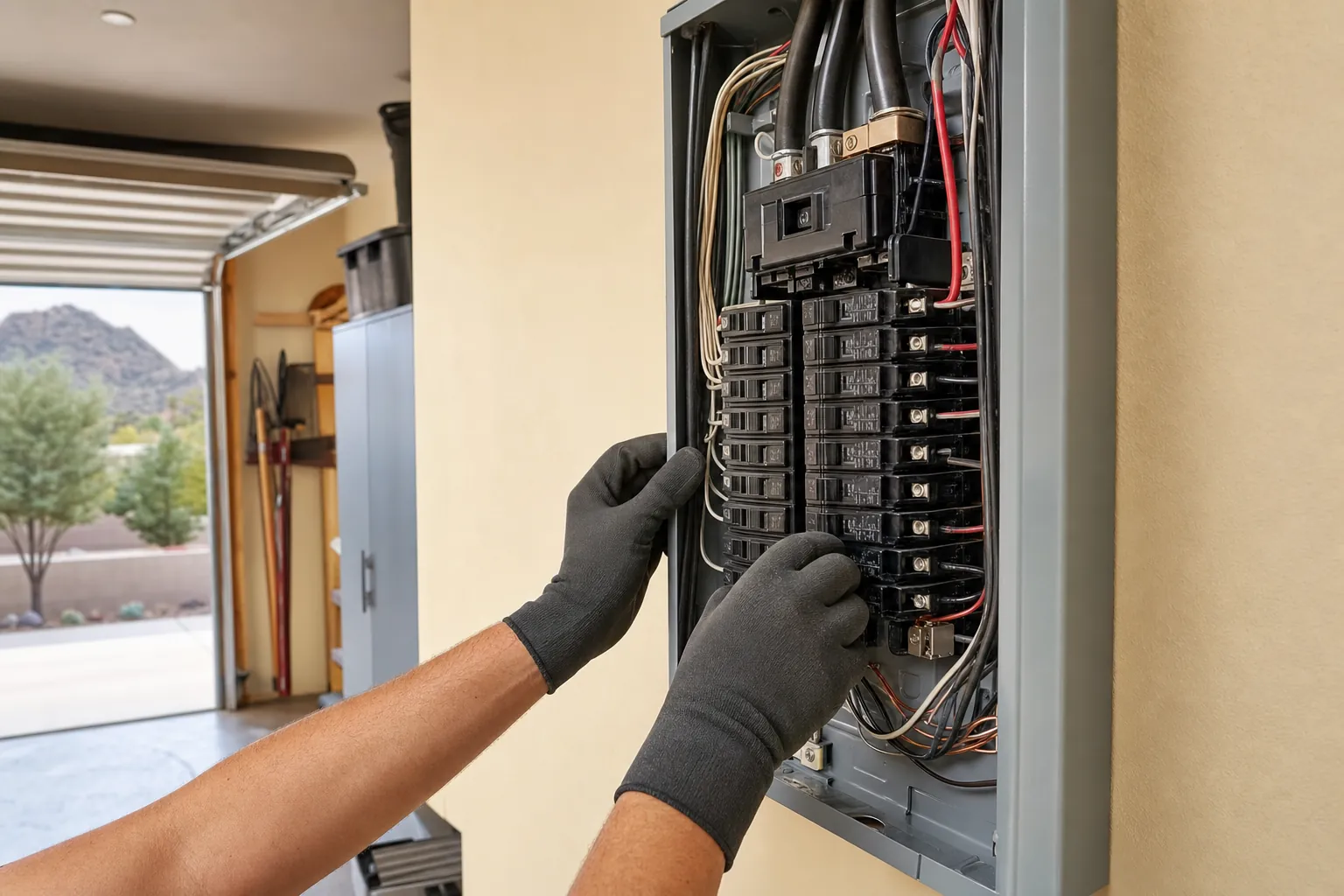

Lights flicker for a few different reasons. Sometimes the cause is limited to one bulb, one dimmer, or one fixture. Sometimes the flicker appears when a larger appliance starts, which can point to the way a circuit is being used. And sometimes it is a warning that a connection, circuit, panel, or utility service needs attention.
The important distinction is not whether the flicker is annoying. It is whether it is isolated and easy to explain, or repeated and paired with other clues. A light that briefly changes once is different from several lights dimming, fixtures buzzing, a breaker tripping, or an outlet feeling warm. Start with the safe observations below, then let the pattern determine the next step.
1. Notice Where and When the Flicker Happens
Before changing anything, pay attention to the pattern. Is it one lamp, one room, or several areas of the house? Does it happen when an air conditioner, microwave, well pump, refrigerator, garage-door opener, power tool, or other motor-driven appliance starts? Did it begin after a storm, a remodel, a new appliance, or changes to the electrical system?
A problem limited to one light is often more likely to be a bulb, switch, dimmer, fixture, or the connection serving that location. A flicker that moves across several rooms may involve a shared circuit, the panel, the service entering the home, or an issue beyond the property. You do not need to diagnose the exact source. Clear observations give an electrician a safer, faster starting point.
Pay close attention if the flicker comes with heat, a burning-plastic smell, buzzing, crackling, sparks, smoke, discoloration, or a breaker that will not stay reset. The Electrical Safety Foundation International's home electrical safety guidance identifies repeated breaker trips, warm outlets, damaged cords, and other signs of electrical trouble as conditions that should not be worked around. Stop using the affected circuit when you can do so safely and arrange professional help.
2. Rule Out a Bulb, Lamp, or Dimmer Problem
If only one light flickers, start with the simple, low-risk possibilities. Turn the light off and let the bulb cool before touching it. A loose bulb can flicker because it is not making a reliable connection. A bulb nearing the end of its life can flicker, too. Replace it with the right type and wattage for the fixture, following the fixture and bulb manufacturer's instructions.
LED bulbs and dimmers need to be compatible. An older dimmer designed for incandescent bulbs can cause an LED bulb to pulse, shimmer, or flicker even when the wiring is sound. A bulb that works normally in another compatible fixture may help narrow the question, but do not take fixtures apart or remove covers to investigate wiring.
Table lamps deserve the same simple check. Make sure the lamp is switched off before checking that its plug is fully seated and its cord is not pinched, frayed, or damaged. Do not use a lamp with a hot plug, damaged cord, or loose socket. Replacing a damaged cord or repairing a fixture is electrical work, not a reason to keep testing the same lamp in different outlets.
Stop using the fixture instead of changing bulbs if the base is discolored, the fixture feels hot, the switch buzzes, the light flashes violently, or there is an odor. Those are not ordinary bulb symptoms. A qualified electrician can inspect the fixture, switch, and circuit without turning a small warning into a risk.
3. Watch for Dimming When a Large Appliance Starts
Many homes show a slight, brief change in light output when a motor-driven appliance starts. The startup demand for an air conditioner, refrigerator, well pump, garbage disposal, vacuum, or garage-door opener can momentarily affect the circuit. A tiny change that happens only at startup may not mean there is an urgent problem.
Noticeable dimming, repeated flickering, or a change that affects much of the home is different. It can mean the circuit is overloaded, the home has limited capacity for the way it is being used, or a connection needs attention. A new appliance may reveal an existing limitation rather than be the only cause.

Make a safe first check by turning off or unplugging portable items that were running on the affected circuit. Do not use a larger breaker, stack power strips, or run a major appliance from an extension cord as a workaround. If the flicker improves after reducing the load, that is useful information. It can help determine whether the home needs a dedicated circuit, a repair, or a broader electrical capacity review.
- Write down which appliance was starting when the lights changed.
- Note whether one room or several rooms were affected.
- Watch for a pattern at the same time of day or during the same household routine.
- Leave the circuit alone if a breaker trips, equipment feels hot, or a smell develops.
Do not make a habit of testing the issue by turning several large appliances on at once. That can overload a circuit and makes it harder to tell what changed. The useful goal is a clear description of normal use, such as lights dimming when the air conditioner starts or a kitchen circuit flickering when the microwave runs, not a home experiment with more electrical demand.
4. Treat These Warning Signs as a Reason to Stop and Call
A flicker is not always an emergency, but it can be part of a larger electrical problem. The safest approach is to pay attention to the signs that move the situation beyond a bulb or a normal appliance startup. Do not try to confirm a suspected wiring or panel problem by repeatedly resetting breakers, opening a panel, or removing outlet covers.
- Lights flicker, brighten, or dim in more than one room.
- A switch, outlet, plug, fixture, or electrical panel is warm, discolored, buzzing, or crackling.
- You smell burning plastic, see sparks, or notice smoke.
- The flicker began after storm damage, water exposure, a remodel, or new electrical equipment.
- A breaker trips repeatedly or will not remain reset.
- The lights change when no obvious appliance is running.
For smoke, sparking, or an active electrical fire, put people first and call emergency services from a safe location. Do not use water on electrical equipment that may still be energized. Hyperion's electrical fire safety guide explains the first priorities when there may be an electrical source.
A breaker that trips along with flickering is another reason to stop using the circuit. The guide to a breaker that keeps tripping covers the safe checks that may be reasonable before a professional diagnosis and the signs that tell you to leave the circuit off.
5. Consider What Changed in the Home
Electrical problems often surface after the way a home uses power changes. A new freezer in the garage, home-office equipment, a workshop tool, additional refrigeration, a hot tub, a kitchen remodel, a vehicle charger, or a larger HVAC system can place new demand on circuits and panels that were not planned for that load.
That does not mean every flickering light calls for a panel upgrade. A loose connection, aging fixture, incompatible dimmer, damaged outlet, or single overloaded circuit may have a much narrower solution. The value of a professional review is matching the repair to the real cause rather than replacing parts based on a guess.

If you are planning an EV charger, a generator, solar and battery storage, or a remodel, bring up the flickering pattern before equipment is purchased or walls are closed. That gives the electrician a chance to consider the home's electrical capacity and available panel space as part of one practical plan. Hyperion's electrical panel repair service can help distinguish a localized panel issue from a larger capacity question.
6. Do Not Assume It Is Only the Utility
Wider-area flickering can come from a utility-side disturbance, weather, or a problem with the service connection. If nearby homes and streetlights are showing the same behavior, report the issue to the utility and keep an eye on conditions. But a utility problem elsewhere does not rule out a concern at your own home, especially if the lights flicker only inside your property or the change is strongest in a particular room.
Look from a safe distance and compare what you can see. If your neighbors appear unaffected, if only part of your home is involved, or if the flicker is accompanied by a tripped breaker or other warning sign, an electrical inspection is the sensible next call. Never approach a damaged service line, meter, or electrical equipment outdoors. Keep clear and contact the utility or emergency services if there is an immediate hazard.
Power quality can also vary during an outage or restoration event. Once power returns, give the home a moment to settle and watch for a continuing pattern. If flickering keeps happening after the neighborhood is stable again, or if appliances, clocks, and lights behave strangely in only your house, treat that as a separate reason to have the electrical system checked.
The U.S. Consumer Product Safety Commission's home electrical safety guide advises homeowners to treat warning signs such as frequent breaker trips, warm outlets, and unusual electrical behavior seriously. The goal is not to make a homeowner suspicious of every brief flicker. It is to avoid ignoring a repeated pattern that needs a qualified look.
7. Give the Electrician Useful Details
You do not need to solve the problem before you call. The most helpful information is what you saw and when it happened. A short note can make the visit more efficient, especially if the issue comes and goes.
- Which rooms, fixtures, or lamps flicker.
- Whether the lights dim, brighten, pulse, or shut off.
- What appliances or equipment were running at the time.
- Whether the problem happens with a specific switch, dimmer, outlet, or circuit.
- Any heat, odor, buzzing, breaker trips, weather event, water exposure, or recent home change.
Do not take risks to gather more information. A photo from a safe distance may be useful for a discolored outlet or a panel label, but never get close to equipment that is hot, smoking, sparking, or damaged. Clear notes are enough to begin a safe, informed conversation.
Plan the Fix Around the Home You Have
Flickering lights can be a small repair or a clue that the home is ready for better electrical planning. A focused repair may solve the issue. In other homes, the right answer could include a new dedicated circuit, panel work, better surge protection, or capacity planning around future equipment.

Hyperion Electric & Solar helps Northern Arizona homeowners diagnose electrical concerns and plan upgrades around how the home is used today. That can include repairs, panel capacity, generators, solar, battery backup, and EV charging. When those decisions belong together, the team can look at the whole plan instead of treating each new load as an isolated project.
For a recurring flicker or any warning sign, contact Hyperion to arrange a service call. If a power outage is part of the concern, the power outage preparedness guide can help your household identify the essential loads that matter most before discussing backup power.