An electrical fire can start with an outlet, a cord, a panel, a light fixture or an appliance. The sight of smoke or flame can make anyone want to act immediately. That instinct is understandable, but this is one situation where the safest response is often to leave first. Electricity, smoke and an uncertain source can turn a small problem into a serious emergency very quickly.
For most homeowners, the useful rule is simple: if there is any question about your safety, the size of the fire or your way out, alert everyone, leave the home and call 911. A fire extinguisher is for a small, contained fire only when you have a clear exit behind you and feel capable of using it. The U.S. Fire Administration uses the same decision test: the fire should be small and limited, the smoke should not put you at risk, help should be called, and you should have a clear escape route.
1. Put People and Your Exit First
Before touching a cord, appliance or breaker, tell everyone in the home that there is a fire. Get children, guests and pets moving toward the exit. If smoke is building, if flames are taller than a small object, or if the fire is spreading, do not stop to collect belongings or troubleshoot the source. Leave, close doors behind you if you can do so safely and call 911 from outside.
A working smoke alarm and an escape plan make this decision much easier under stress. Federal fire-safety guidance recommends two ways out of each room and a household meeting place outside. Think through those basics before there is an emergency, especially in rooms where cords, chargers, power strips or older wiring are in regular use.
Once you are outside, stay outside. Do not go back in because the smoke seems lighter or because you want to check whether the breaker tripped. Fire conditions can change faster than they look from the door.
2. Do Not Use Water
Do not throw water on an electrical fire while the equipment or circuit may still be energized. Water can conduct electricity and create a shock hazard. It can also put you closer to the source at the exact moment you need distance and a clear exit.
Skip improvised solutions, too. Do not grab a wet towel, spray cleaner, garden hose or whatever happens to be nearby. A fire involving electricity is not the time to test a home remedy. The better question is whether the fire is small enough and contained enough to use the right extinguisher while standing between the fire and an open way out.
If a device is smoking but has not caught fire, do not touch it or try to pull a damaged plug from a hot outlet. Move people away, leave the room if smoke is present, and call for help. A damaged cord or outlet can be energized even when the appliance appears to have stopped working.
3. Cut Power Only When It Is Clearly Safe
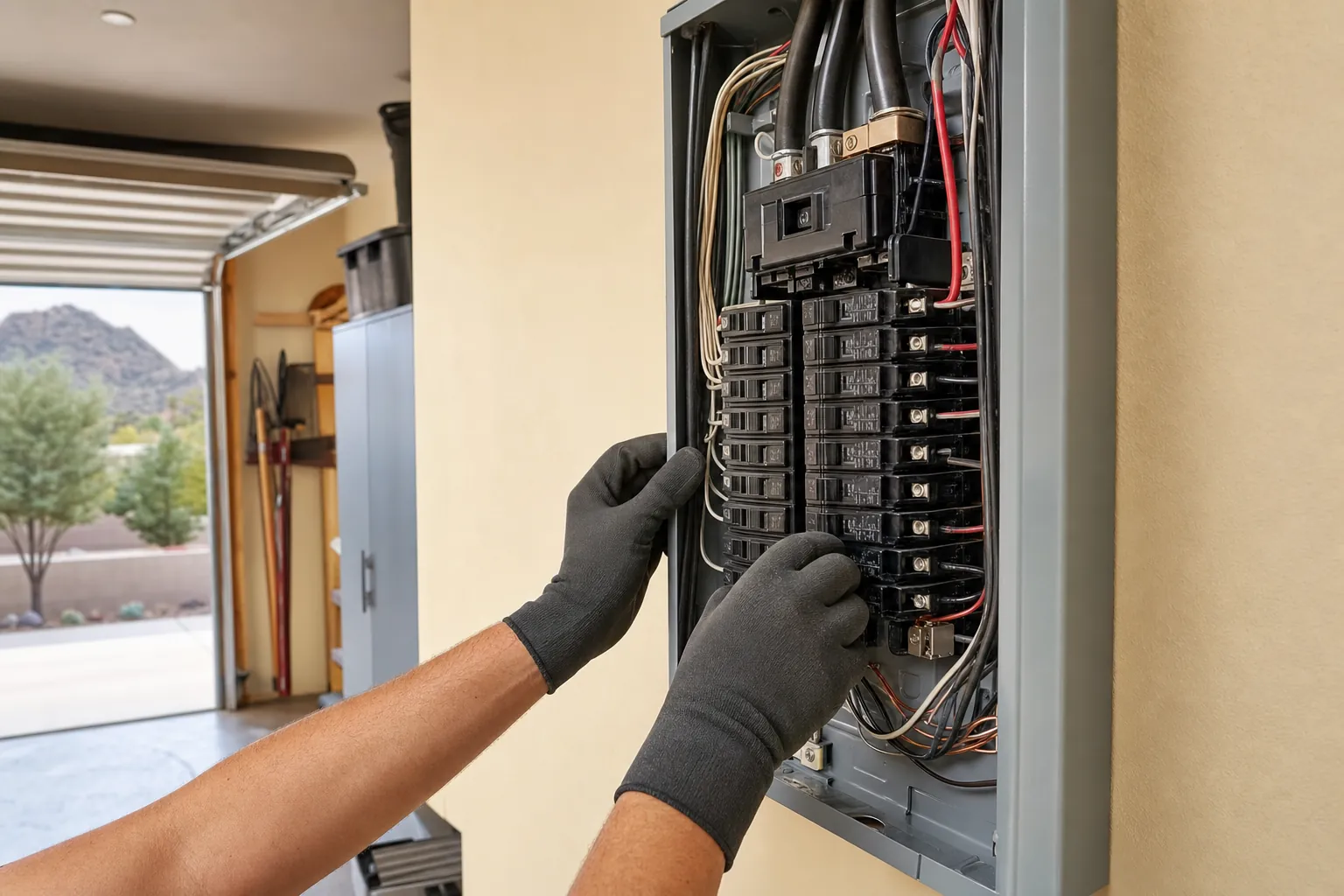
Turning off power can remove the electrical source, but it is never worth moving toward smoke, flame or a damaged outlet to do it. If you can safely reach the appliance cord without reaching over the fire, unplugging it may stop power to that one device. If the electrical panel is safely accessible and away from the incident, switching off the affected circuit may help.
That is a judgment call, not a requirement. Do not search for the right breaker while a fire grows. Do not open a panel that is hot, smoking, sparking or making unusual noise. And do not assume a wall switch makes the equipment safe to handle. When in doubt, leave the power alone, get out and call 911.
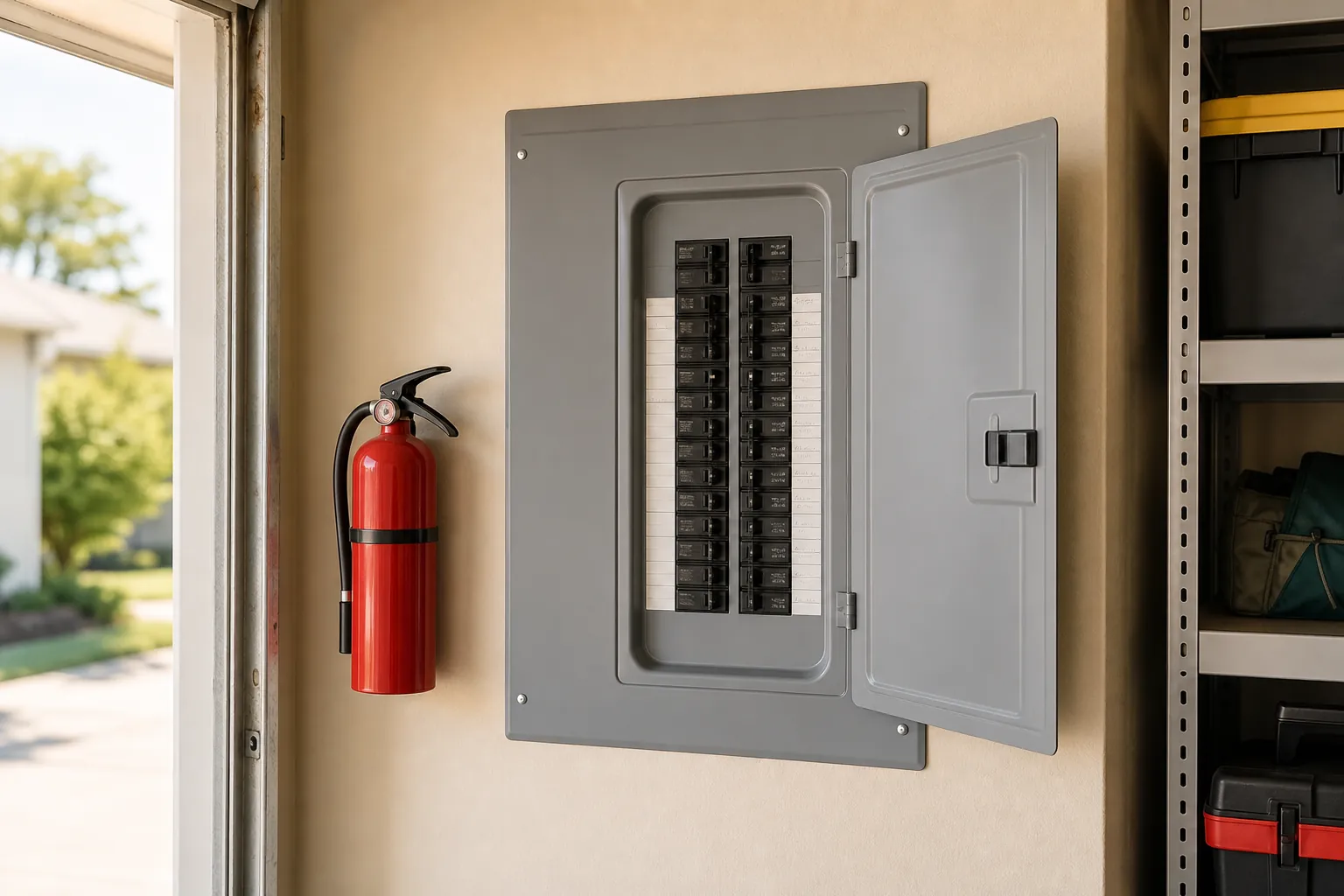
Clear panel labeling helps during ordinary maintenance and makes an emergency less confusing. During a planned electrical service visit, it is worth asking whether the circuits are correctly identified and whether the panel has room for the way your home actually uses power.
4. Use an Appropriate Extinguisher Only for a Small, Contained Fire
Electrical equipment is a Class C fire hazard while it is energized. The U.S. Fire Administration explains that Class C extinguishers use a nonconductive agent for appliances, tools and other plugged-in equipment. Many homes use a multipurpose extinguisher marked ABC, but the label matters more than assumptions. Check the extinguisher before an emergency, not while smoke is filling the room.
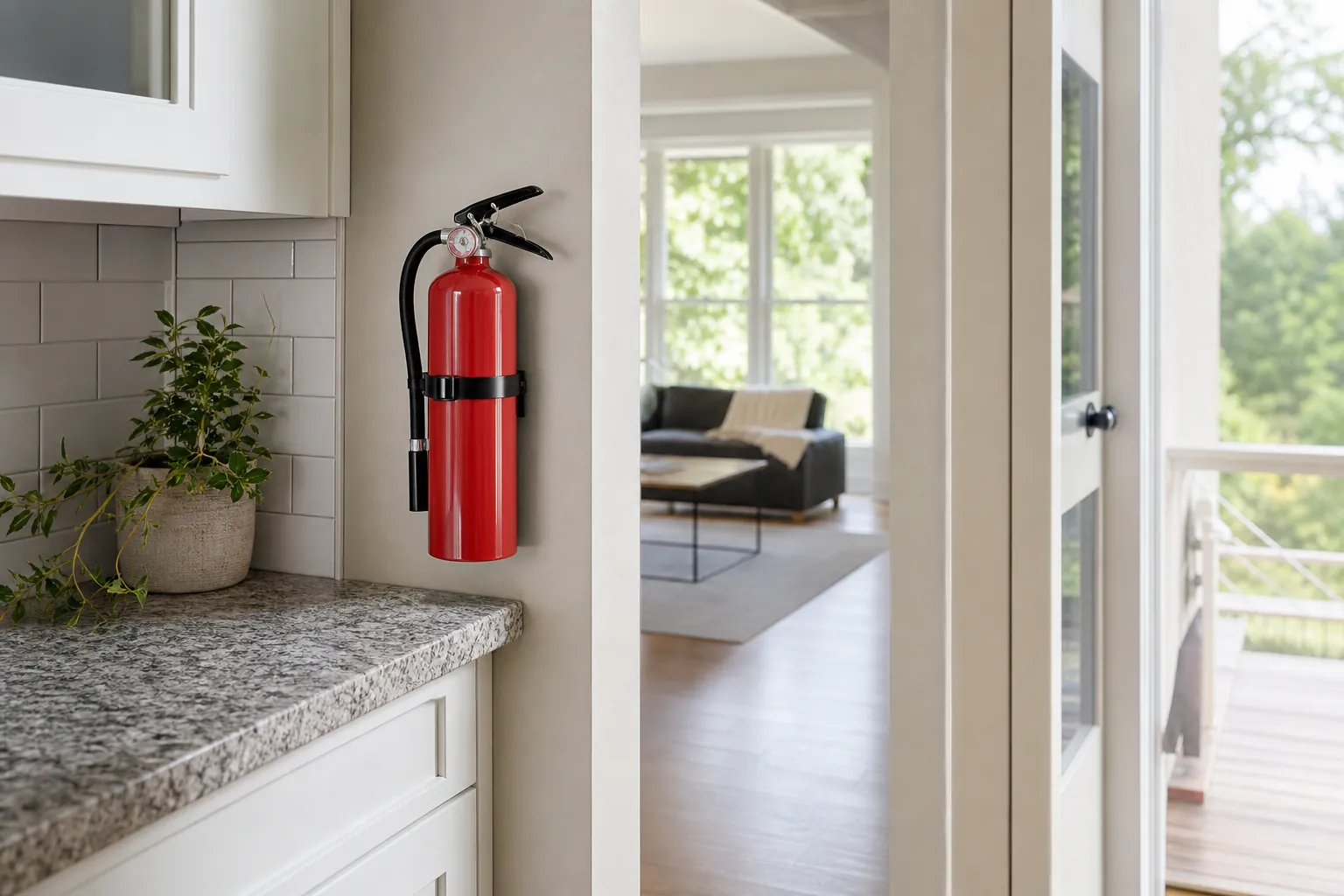
Use an extinguisher only when all of the following are true:
- Someone has called 911 or is calling while you act.
- The fire is small and contained to one object or surface.
- You can breathe without being overwhelmed by smoke.
- You have a clear exit directly behind you.
- You know how the extinguisher works and can handle it safely.
If those conditions are met, use the PASS method printed in many fire-safety resources: pull the pin, aim low at the base of the fire, squeeze the lever and sweep from side to side. Keep watching the area after the flames stop. If the fire flares again, if smoke increases or if the extinguisher does not control it immediately, leave. The goal is not to prove that you can handle it. The goal is to get everyone out safely.
5. Do Not Use the Circuit Again Until It Has Been Checked
A fire that appears to be out is not a repaired electrical problem. Keep the affected appliance unplugged and leave the circuit off if you safely turned it off. Do not reset a breaker just to see whether it holds. Do not replace a blown fuse with a larger one. And do not cover scorch marks with a new outlet faceplate and move on.
The visible damage may be only part of the failure. Heat can harm insulation, loosen a connection, damage a receptacle or leave a conductor compromised inside a wall. An electrician can trace the cause, replace damaged components, test the circuit and decide whether the problem was isolated or points to a larger issue in the home.
That is especially important after a panel issue, an overheated outlet, a repeated breaker trip or anything involving a major appliance. A qualified review can also identify whether your home needs a panel repair, updated receptacles, better circuit capacity or a targeted surge-protection plan.
Common Warning Signs Before an Electrical Fire
Many electrical problems give a homeowner a warning before they become an emergency. Do not ignore signs that recur, become warmer, smell worse or affect more than one room. The U.S. Fire Administration advises replacing cracked, loose or damaged appliance cords, avoiding overloaded outlets and power strips, and replacing outlets that no longer hold plugs snugly.
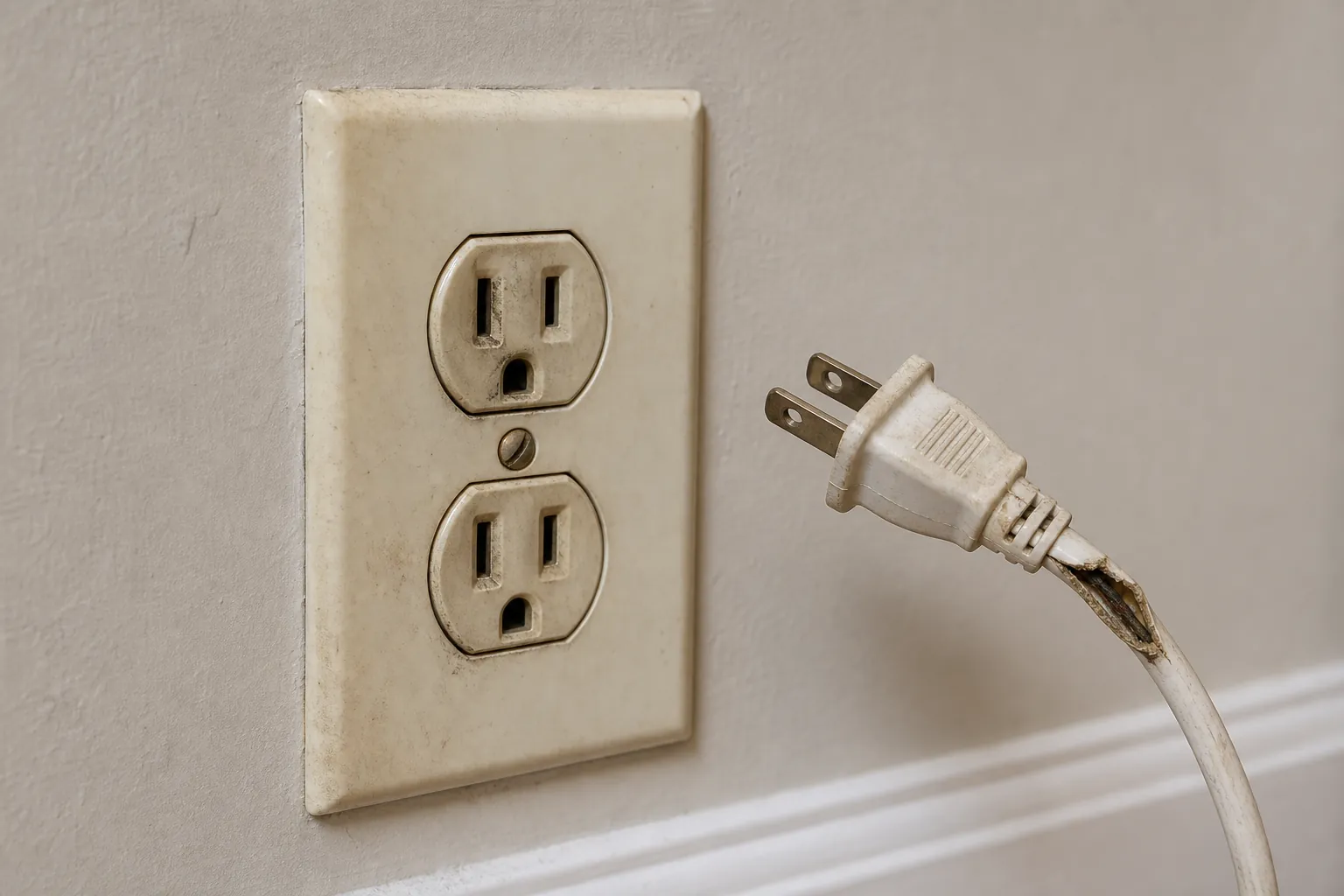
- Warm, discolored or buzzing outlets and switches.
- A burning-plastic smell near a receptacle, panel or appliance.
- Frequent breaker trips, blown fuses or lights that flicker without an obvious reason.
- Plugs that fall out, sparks when a plug is inserted or outlets with visible damage.
- Frayed cords, cracked plugs or power strips that feel hot.
- Extension cords being used as a permanent solution for major appliances, heaters or high-demand equipment.
One occasional breaker trip can have a simple cause. Repeated trips, heat, odor or visible damage are different. They are reasons to stop using the circuit and schedule an inspection. Contact Hyperion before a minor warning turns into a disruptive repair or a more serious safety concern.
Prevent the Problems You Can See
Electrical safety is rarely about one dramatic decision. It is the smaller habits that stop heat and damaged equipment from building into a bigger issue. Major appliances should be plugged directly into a wall outlet, not an extension cord. Power strips should not be overloaded or daisy-chained. Lamps should use bulbs within the fixture’s recommended wattage. Cords should stay out from under rugs and away from places where furniture can pinch them.
It also helps to look honestly at homes that have changed over time. A room that once held a lamp and a television may now carry office equipment, chargers, heaters, an entertainment system and a portable air conditioner. A garage may have gained freezers, tools and an EV charger. When a home’s electrical demand changes, the circuits and panel should be able to support it safely.
If you are planning a remodel, new equipment or an addition, review the electrical work before the walls close up. Hyperion's new-construction wiring service is built around proper capacity, accessible planning and clean installation from the start. For an existing home, the same mindset applies: solve the underlying electrical issue instead of adding another extension cord.
What an Electrician Looks For After Heat or Smoke
After an electrical fire or overheating event, the important question is not only what burned. It is why it got hot in the first place. A professional inspection may include the receptacle or appliance connection, the circuit wiring, the breaker, the panel, the load on that circuit and any signs of moisture, damage or poor prior work.
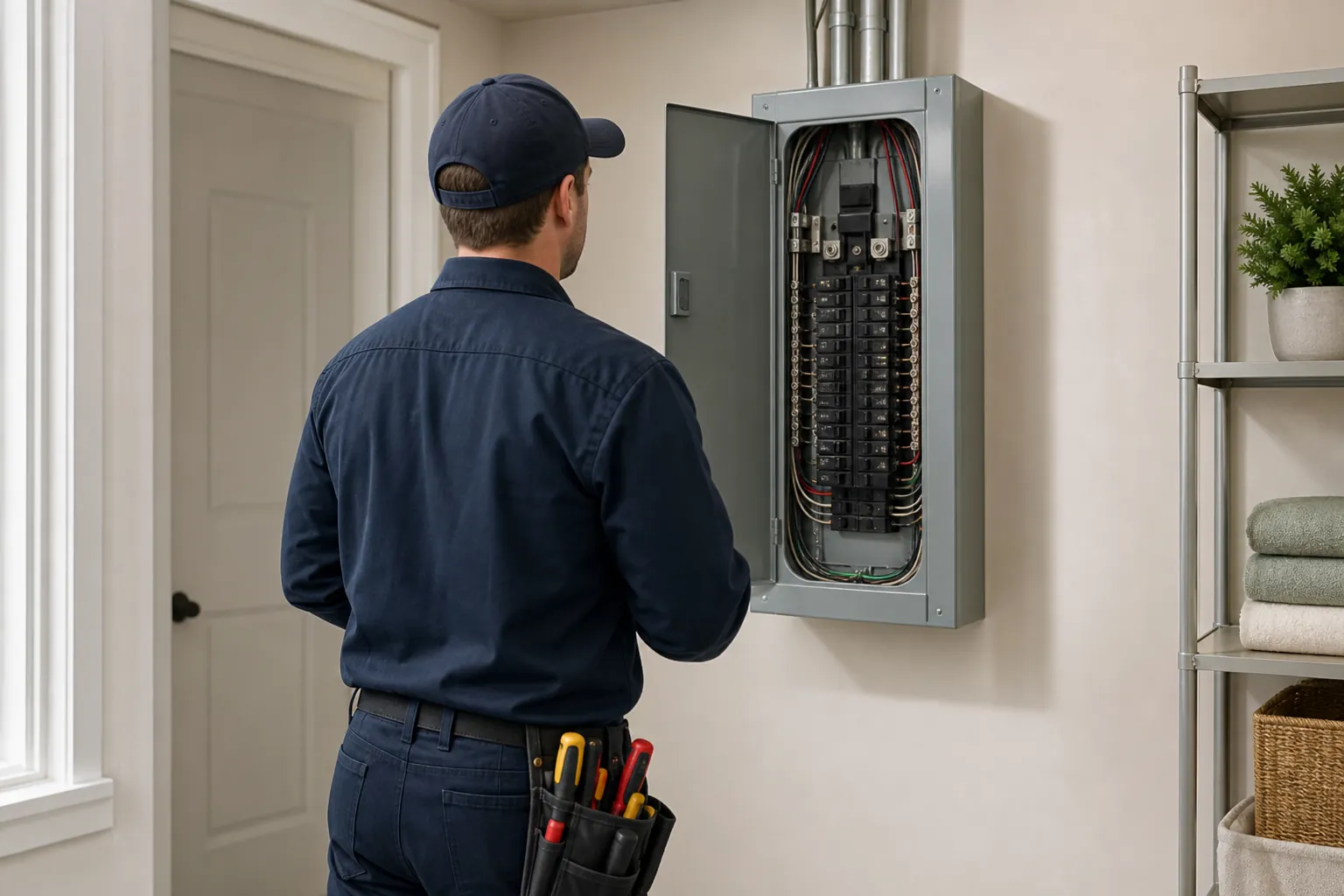
That review is often much more useful than simply replacing the outlet. For example, an outlet can discolor because the connection behind it loosened, because a plug or device was damaged, because the circuit is overloaded or because a larger wiring problem is present. The fix should match the cause.
Hyperion helps Northern Arizona homeowners with electrical repairs and upgrades, panels, outlets, lighting, surge protection and backup-power planning. The advantage of looking at the home as a whole is that today's repair can also account for future needs, whether that is a remodel, a generator, an EV charger or a solar-and-battery plan.
Keep a Short Emergency Plan Where You Can Find It
A good plan is simple enough to use under pressure. Make sure adults in the home know two ways out of common rooms, where the meeting place is and where the fire extinguisher is kept. Check the extinguisher’s pressure gauge and instructions periodically. Test smoke alarms. Keep the electrical panel accessible and its circuit directory current.
For related household preparation, use Hyperion's power outage planning guide to think through lighting, communication, food safety and the electrical systems your household relies on. A calm plan for one emergency tends to make the next decision easier, too.
When to Call Hyperion
Call a qualified electrician after any electrical fire, smoke event, scorched outlet, overheated panel, damaged cord connected to household wiring, recurring breaker trip or persistent burning smell. Those are not problems to monitor casually. They deserve a clear diagnosis before the equipment goes back into service.
Hyperion Electric & Solar can assess the issue, explain what failed and make the repair plan fit the home you have today. When the work involves capacity, panels, whole-home surge protection, a generator or a future solar and battery system, the team can look at those decisions together instead of treating each one as an isolated project. To arrange a service visit, get in touch with Hyperion.