
Power outages rarely arrive at a convenient time. A summer storm, a vehicle strike, a planned utility interruption or a problem closer to home can quickly affect lighting, refrigeration, internet access, garage doors and the equipment your household relies on. The useful response is not panic-buying a generator after the fact. It is a simple plan made while the lights are still on.
For Northern Arizona homeowners, that plan should account for heat, changing weather, refrigerated food, well pumps where applicable and the fact that some homes depend on electricity for far more than lights. The goal is not to power every outlet forever. It is to know what matters most, protect it safely and have a clear next move when the grid goes down.
Start With the Needs That Cannot Wait
List the things your household would genuinely miss first. This varies from home to home. A family with refrigerated medication, mobility equipment or a CPAP machine has different priorities than a household mainly concerned with keeping food cold and charging phones. The federal power outage guidance from Ready.gov recommends identifying needs that rely on electricity and arranging an alternative source of power before an emergency.
Write the list in order. A useful first tier often includes medication, medical devices, communication, refrigeration, a garage door plan and enough lighting to move safely at night. A second tier may include a well pump, internet equipment, a few fans, a security system or a workstation. Whole-home comfort loads, such as a large air-conditioning system, are a separate conversation because they can change the size and cost of the backup solution substantially.
Then choose one person who will make the first calls and one place where the household will meet or leave a note. Keep utility contact information, a nearby relative’s number and key medical contacts on paper. Phones are useful until their batteries are not.
Build an Outage Kit You Will Actually Use
A good kit is not a dramatic survival display. It is a compact set of ordinary supplies you can find in the dark and refresh without fuss. Keep it in one known spot, and check it before the season when storms are most likely in your area.
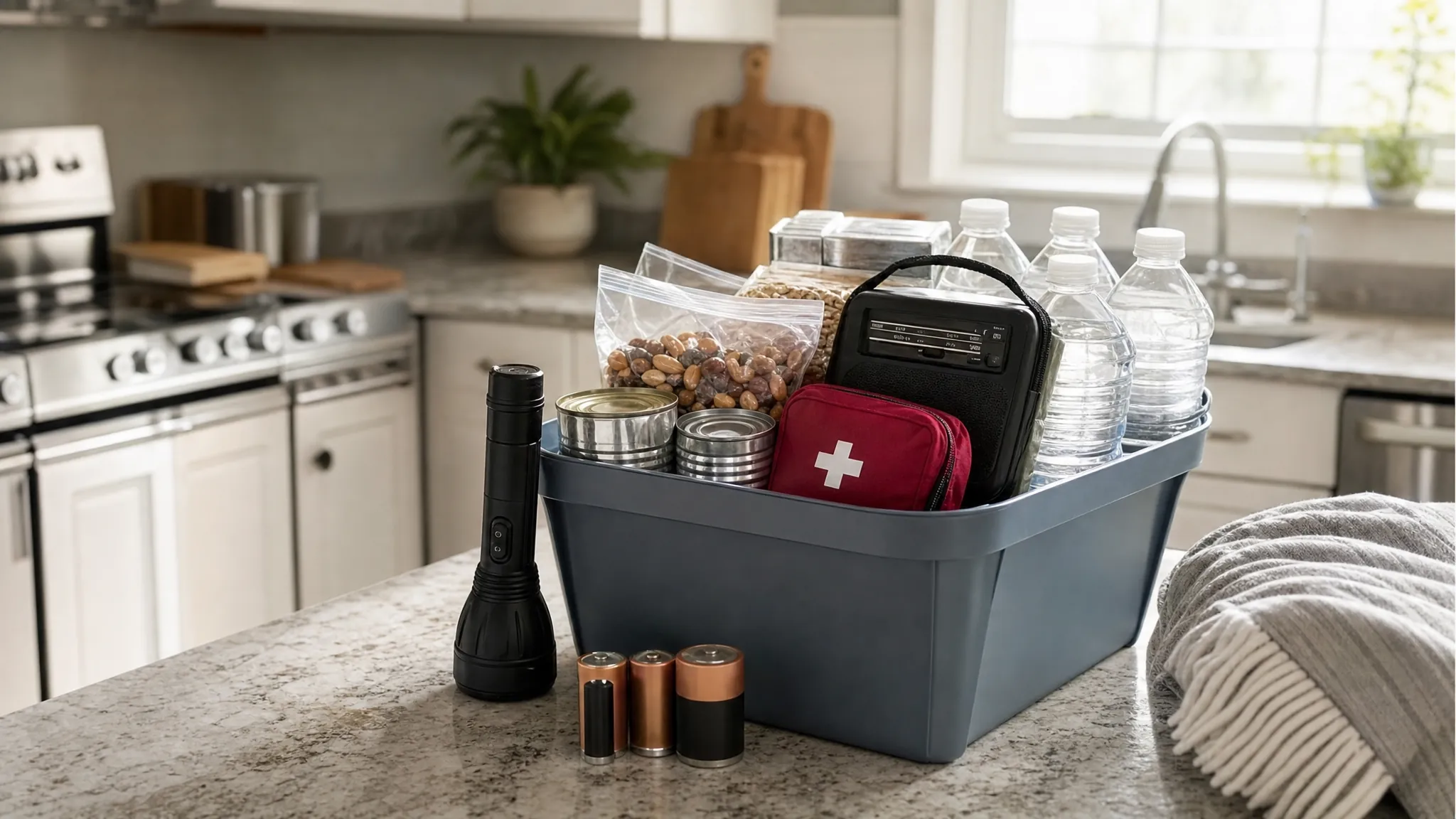
- Flashlights or battery lanterns for each main area of the home, plus fresh batteries.
- Charged power banks and vehicle chargers for phones.
- Drinking water, shelf-stable food and a manual can opener.
- A first-aid kit, needed medications and a written medication list.
- A battery-powered or hand-crank radio for local information.
- Pet supplies, infant supplies and any backup items for people who need powered equipment.
- A cooler and ice packs if keeping perishables cold matters to your household.
Use battery-powered light rather than candles. Candles add an open flame when people are tired, moving around unfamiliar rooms and sometimes dealing with wind or pets. Keep a small flashlight by each bed, one near the electrical panel and one near the door you use most often.
Before a forecast event, charge phones and battery packs, make ice, fill clean water containers if appropriate for your home and set the refrigerator to a colder setting. You do not need a perfect checklist. You need a few habits that reduce the scramble.
Protect Food, Water and Everyday Appliances
When the power goes out, close the refrigerator and freezer doors and leave them closed as much as possible. Ready.gov notes that an unopened refrigerator keeps food cold for about four hours, while a full freezer can hold a safe temperature for about 48 hours. Its food-safety guidance also advises discarding perishable food that has been warm for too long or seems off.
Arizona public-health guidance makes the same practical point: when you are unsure, do not gamble on food safety. If your home uses a private well, think about water separately. A power outage can stop the pump even when the plumbing itself is fine, so stored drinking water belongs in the plan.
For appliances and electronics, turn off or unplug sensitive items you do not need running when power returns. Leave one light on so you know when service is restored. If you have a surge protector, remember that it is not the same thing as whole-home surge protection. A qualified electrician can help assess whether the systems you depend on deserve broader protection.
Do Not Improvise Generator Safety
Portable generators can be useful, but they are not casual equipment. Never run one in a garage, carport, shed, basement or any enclosed area. The U.S. Consumer Product Safety Commission says portable generators should operate outdoors, at least 20 feet from the home, with exhaust directed away from doors, windows and vents. It also recommends carbon-monoxide alarms with battery backup on every level and outside sleeping areas. Read the agency’s generator and carbon-monoxide safety guidance before you use one.
Never plug a generator into a wall outlet to try to energize the house. That can create a serious shock and fire risk and can send electricity back onto utility lines. A safe connection is planned around the generator, the circuits you want to carry and the proper transfer equipment. The U.S. Department of Energy describes an automatic transfer switch as equipment that moves power safely between utility service and a backup source without backfeeding the grid.
Fuel is part of the plan, too. Store it only according to the manufacturer’s and local safety requirements, keep it away from ignition sources and allow equipment to cool before refueling. If the safe operating location, fuel storage or connection method is unclear, stop there. The right answer is not a workaround.
Choose the Right Level of Backup Power
Backup power works best when it is built around priorities instead of wishful thinking. Start with the loads you identified earlier, then consider how long you want to support them and how automatic you want the experience to feel.
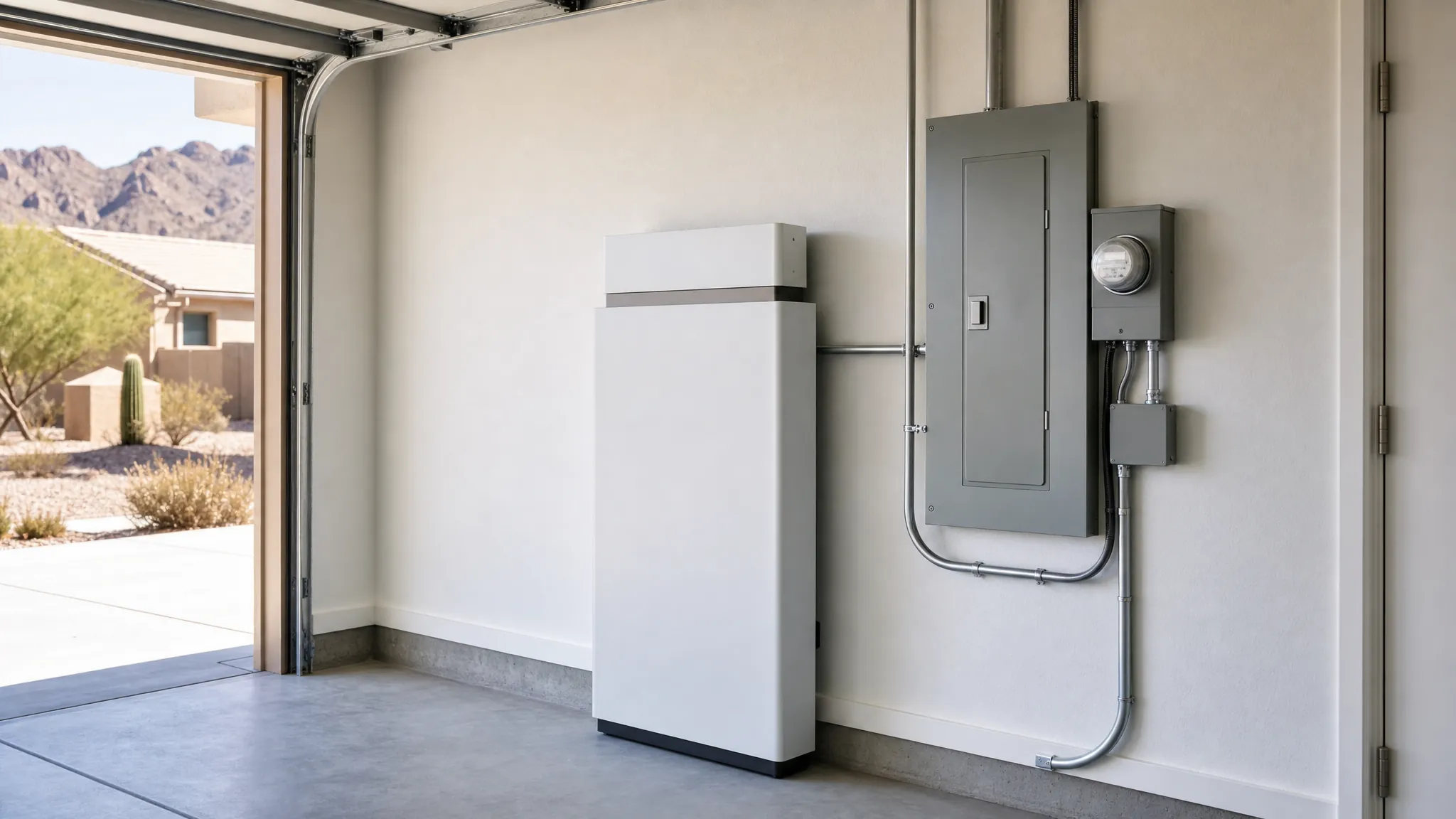
A portable generator can make sense for occasional, limited use when you are comfortable with setup, fuel and outdoor operation. A permanently installed generator can support selected circuits or a larger portion of the home, depending on the design. A battery system can provide quiet backup for chosen loads, and it may pair well with solar when the equipment and electrical plan are designed together.
Solar panels alone usually do not keep a home powered during an outage. Standard grid-connected systems shut down to protect utility workers. A battery-backed system can continue supplying selected circuits, but its real-world performance depends on battery size, the loads you choose and how the system is configured. Hyperion can help you design a solar and battery setup, estimate savings and plan the electrical requirements.
The electrical panel matters, too. Older equipment, limited capacity and a crowded circuit layout can all shape what is possible. This is why backup planning often starts with a look at the existing service, not a product brochure. If an upgrade is needed, it may also create capacity for an EV charger, a remodel or future energy improvements. Hyperion can review those options through its residential electrical services.
Do a 15-Minute Home Walk-Through
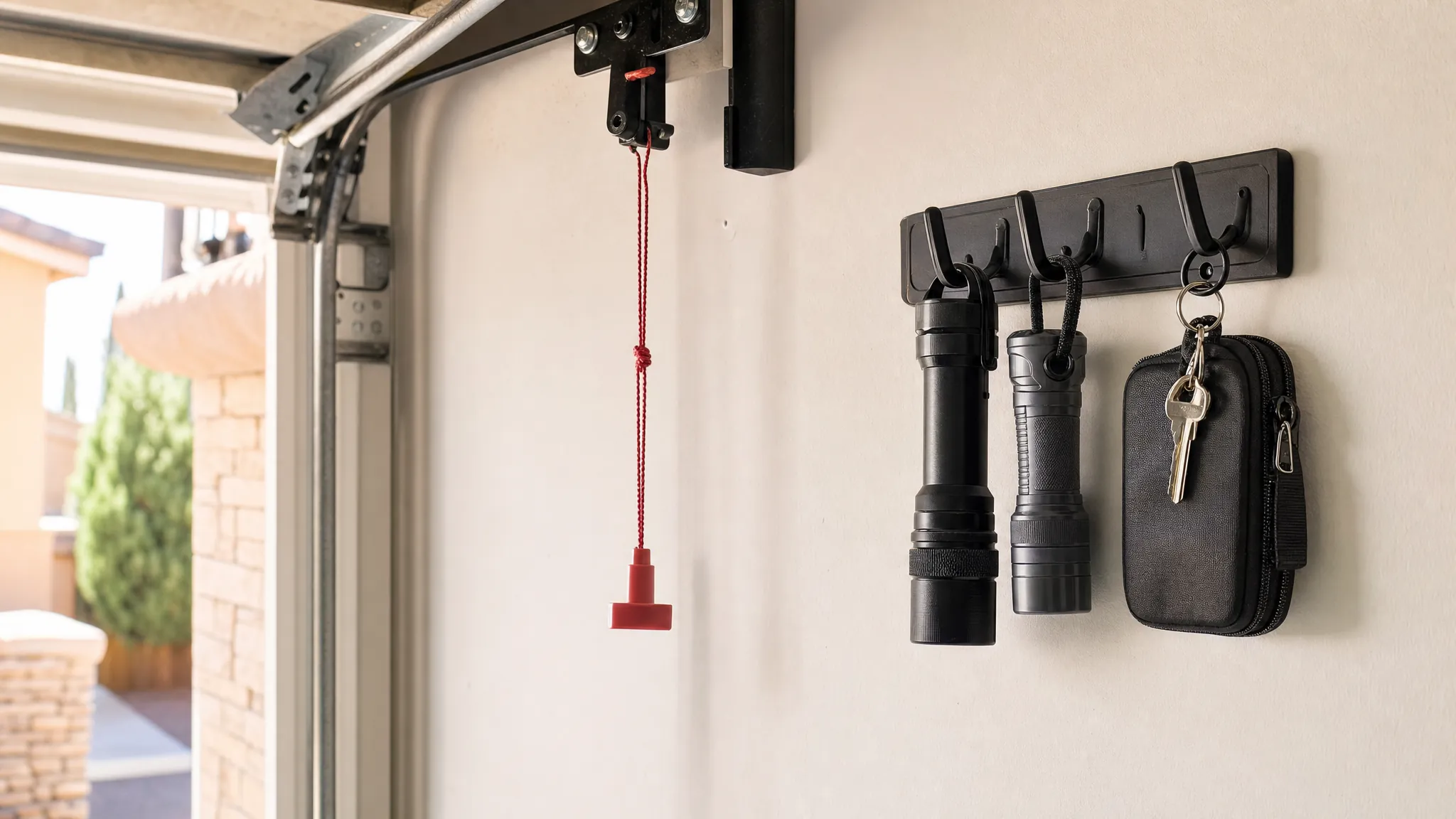
Once you have the basics, walk through the house as if the power had just gone out. This is the fastest way to find the gaps that a supply list misses. Start at the front door. Can you get in and out without the garage door opener? Do you know where the manual release is, and does every adult in the household know how it works? Put a flashlight nearby rather than assuming a phone will be charged.
In the kitchen, decide which shelf-stable meals you could make without the microwave, whether you have a manual can opener and how you would keep medication or baby supplies at the right temperature. In bedrooms, make sure a light is within reach. In the garage or utility area, check that carbon-monoxide alarms have working backup batteries and that emergency supplies are not buried behind tools or boxes.
Look at the equipment that often gets overlooked: the internet router, security system, gate, garage door, irrigation controller, aquarium, well pump and any appliance that could be affected when power returns. You do not need to run every item from backup power. You do need to decide whether losing it creates a real safety, health or access problem.
Finally, walk out to the place where a portable generator would have to operate. If there is no outdoor location that safely keeps it away from doors, windows, vents and attached structures, do not make a generator your default plan. That practical limitation is useful information. It may point you toward a different backup approach or a professional review of the home’s electrical options.
Write Down What You Learn
Turn the walk-through into a one-page household plan. Keep it with the outage kit and take a photo of it for each adult in the home. Include the utility account number, emergency contacts, the location of flashlights and supplies, any powered medical needs, the garage-door release location and the first circuits you would want backed up. If you have a generator or battery system, add its operating instructions and the name of the installer.
A written plan saves people from making decisions from memory during a stressful evening. It also gives you a much better starting point when you talk with an electrician. Instead of saying “we want backup power,” you can explain exactly what needs to stay on, how long you need it and where the current setup falls short.
Make the Plan Specific to Your Home
Use an outage as a prompt to walk through your own home. Do you know how to open the garage door manually? Are flashlights within reach? Will your household know whether the outage is just your house or the wider neighborhood? Are carbon-monoxide alarms tested and battery-backed? Do you have a plan for heat, cooled rooms, pets, well water or medical equipment?
Arizona’s monsoon season is a useful reminder that wind, lightning and storm damage can interrupt service with little warning. The Arizona Department of Health Services specifically notes the power-outage risk that comes with monsoon weather and encourages residents to prepare before conditions worsen. Preparation does not promise that an outage will be easy. It makes the first several hours much more manageable.
When It Is Time to Bring In an Electrician
Call a qualified electrician when the plan involves household wiring, a transfer switch, panel capacity, a permanent generator, surge protection or battery backup. Those are systems that need to work predictably when conditions are already stressful. They also need to be designed around the home, not just the equipment you found online.
Hyperion Electric & Solar helps Northern Arizona homeowners plan electrical upgrades, generators, surge protection, and solar or battery systems as connected parts of the home. That means starting with what you want to keep running, looking honestly at your electrical service and building a plan you can understand. To discuss your home, contact Hyperion or call for a service visit.