
An outlet that suddenly stops working is frustrating, especially when it affects a lamp, charger, appliance, home office, garage, or kitchen routine. The outlet itself is not always the source of the problem. A tripped protective device, a breaker, a connected appliance, or another outlet on the same circuit can all be involved.
The goal is not to find the exact cause by opening equipment or trying random resets. It is to take the safe first steps, notice useful clues, and stop when the situation points to heat, damage, moisture, or a circuit problem. That gives an electrician a clearer starting point and keeps the home safer in the meantime.
1. Check for warning signs before touching anything
Before you unplug, reset, or move anything, look from a safe distance. Smoke, sparking, a burning-plastic smell, melted plastic, discoloration, heat, buzzing, crackling, water near the outlet, or a shock are not troubleshooting clues to chase. Keep people away from the area and contact emergency services from a safe location if there is an active fire, smoke, or immediate danger.
If the outlet, plug, and nearby wall are dry, cool, and intact, unplug any connected device by holding the plug body. Leave the outlet unused while you make the checks below. The Electrical Safety Foundation International includes damaged outlets, loose plugs, repeated breaker trips, and unusual sounds among the home electrical warning signs worth taking seriously in its home electrical safety guidance.
- Do not plug another device into the outlet just to test it.
- Do not remove the cover plate or reach into the outlet.
- Do not use an extension cord as a long-term workaround.
- Do not keep resetting a breaker that will not stay on.
2. See whether a GFCI outlet has tripped
Many outlets in bathrooms, kitchens, garages, laundry areas, unfinished spaces, and outdoor locations are protected by a ground-fault circuit interrupter, usually called a GFCI. That protection may be built into the outlet with test and reset buttons, or it may be located somewhere else on the same circuit.
If you can find a dry, intact GFCI outlet and there are no warning signs, unplug the equipment on the affected outlet first. Follow the device markings to press reset once. A reset that holds can restore power to more than one outlet. A reset that will not hold, or that trips again, is useful information. Leave it alone and arrange service rather than forcing the button.
Hyperion's guide to a GFCI outlet that keeps tripping explains why moisture, connected equipment, and downstream outlets can all matter. Never reset a wet, warm, cracked, discolored, or damaged device.
3. Look for a tripped breaker, once and carefully
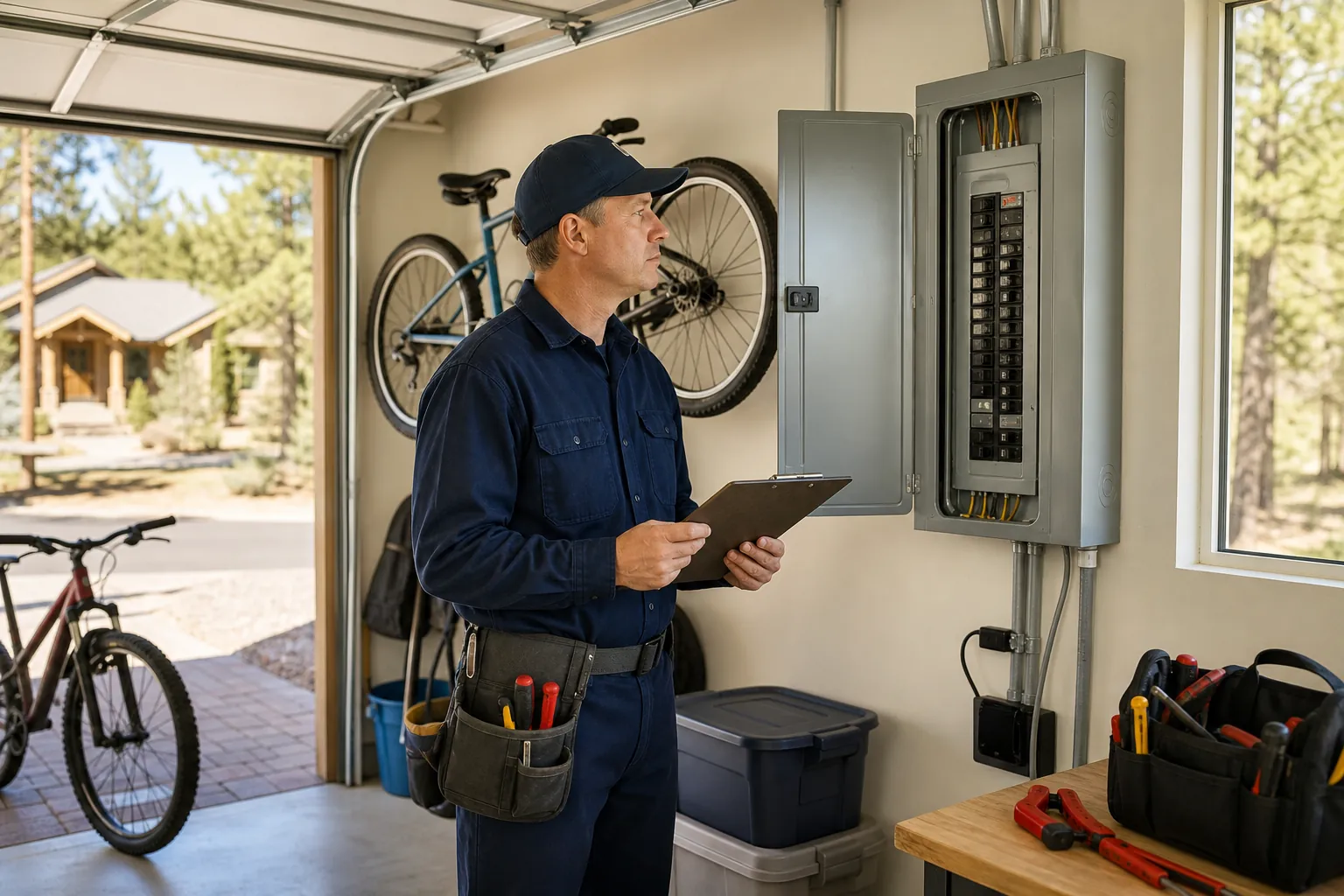
A group of outlets can share one circuit. If several outlets, lights, or devices in one area stopped working, a breaker may have opened. Check the electrical panel only when it is dry, accessible, cool, and free of buzzing, damage, odor, or moisture. A tripped breaker can sit between the on and off positions rather than looking fully off.
If there are no danger signs, turn off or unplug the devices that were running on the affected circuit. Then reset the breaker once by moving it fully to off before returning it to on. If it trips again, will not stay reset, or the panel has any warning sign, leave it off. Repeated resets do not correct an overload, fault, damaged device, or connection problem.
For a breaker that keeps opening, Hyperion's breaker-tripping guide covers the difference between a simple overload and a situation that needs a qualified diagnosis. Do not replace a breaker yourself or choose a larger breaker as a workaround.
4. Notice the pattern, not just the outlet
Make a quick note of what lost power. Was it one receptacle, one wall, one room, an outdoor outlet, or a mix of outlets and lights? Did the problem begin when a space heater, microwave, vacuum, garage tool, refrigerator, hair dryer, or other appliance was running? Did it follow rain, irrigation, a leak, a remodel, or a new device?
Those details help distinguish a local outlet concern from a circuit or connected-equipment issue. They also help an electrician work efficiently without asking you to take risks to test live wiring. If a freezer, medical device, well pump, security system, or other essential equipment is affected, mention that when you arrange service.
5. Do not overlook connected equipment
A damaged charger, appliance cord, power strip, lamp, or tool can be part of the story. From a safe distance, look for frayed insulation, bent prongs, crushed cords, melted plastic, or a loose plug. If you see damage, stop using that item as well. Moving it to another outlet is not a safe way to rule it out.
Power strips and extension cords do not add capacity to a circuit. They only add more places to connect equipment. Avoid daisy-chaining strips, using a cord as permanent wiring, or plugging high-demand appliances into a strip intended for small electronics. The U.S. Consumer Product Safety Commission's home electrical safety guide also advises replacing damaged cords and treating damaged outlets seriously.
6. Know when to call an electrician
Call an electrician promptly when an outlet stays dead after a safe GFCI or breaker check, when a reset will not hold, or when the cause is unclear. Call sooner if the problem includes heat, a burning smell, noise, damage, moisture, flickering lights, a shock, a loose outlet, or repeated breaker trips. These are reasons to stop using the circuit, not reasons to keep experimenting.
A qualified electrician can trace the circuit, test the outlet and connected equipment, and check the breaker, wiring connections, GFCI protection, and panel context safely. The solution may be a focused outlet repair, a correction to a connection, a dedicated circuit for a demanding appliance, or a broader look at electrical capacity.
For a dead outlet or another electrical concern in Northern Arizona, contact Hyperion to arrange a service visit. If the outlet is warm as well as dead, keep it out of service and use the safety steps in the hot outlet guide.